

Moncton Casino

Play blackjack at Casino New Brunswick in Moncton with multiple table limits and shuffle options.

Live Table Action

Moncton Casino Play Blackjack

Tables and Betting Limits

On our blackjack floor we offer several tables at different limits. Minimum bets usually start at 5 CAD and can rise to 25 CAD depending on the table and the time of day. The minimum and maximum bet amounts are normally posted directly on the table. In many casinos, table minimums typically range from 5 to 25 dollars or the local equivalent. During daytime hours you may see 5 and 10 CAD tables running with Continuous Shuffle Machines. Those CSM units keep cards moving back into the shoe so we do not stop for long shuffle breaks.

In the evening the room can feel different. Table minimums may step up to 15 CAD and higher, some layouts may switch to automatic shufflers, and the higher-end spots may stay on traditional hand shuffling for players who prefer that pace.

Weekends get busy fast and tables fill. On quieter weekday afternoons we sometimes pull players together to fewer active games. Regular blackjack seating is generally first come, first served.

Table TypeMinimum BetShuffle MethodTypical Hours
Low-limit daytime5-25 CADContinuous Shuffle MachineDaily 12:00-18:00
Standard evening10-25 CADAutomatic shufflerDaily 18:00-close
Premium hand-shuffle15-25 CADManual shuffleEvenings and weekends

How the Game Works

The idea in blackjack is simple enough: your hand should finish closer to 21 than the dealer’s total, but without going over 21. Blackjack is also known as 21 and is one of the most popular casino games worldwide, including in Canadian casinos. You are dealt two cards to start. The dealer usually draws one card face up and one face down. Number cards use their printed value, face cards count as 10, and aces count as 1 or 11, whichever helps your hand more.

A natural blackjack happens when your first two cards are an ace and any 10-value card. That win pays 3:2, as long as the dealer does not also have 21 on the deal. If both sides show blackjack, the hand is a push and we simply return your original stake. Any other winning hand is paid at 1:1.

At the table use hand motions instead of talking through every decision. Hand signals for hitting or standing are common in blackjack, though the exact gestures can vary by location. You keep track of your own total, though our dealers will call it out if you ask.

Your Options During Play

Once everyone has their initial two cards, your choices start.

Hitting means taking another card. You may hit several times in a row until you decide to stand or your hand goes over 21 and busts. Standing freezes your total and passes play on to the next seat.

Doubling down lets you increase the pressure. You double your original bet and receive a single extra card, then your hand stops. It is a big call on hands like 11 against a dealer’s low up card. Most tables allow you to double on any two-card start, while a few limit doubling to totals of 9, 10, or 11.

If your starting cards share the same value, you can split them into two separate hands. You match your first wager for the new hand, we deal one extra card to each, and you then play each hand in turn. When you split aces, in most cases you receive just one card per ace. Whether you can split again if another pair appears depends on the specific table; some layouts allow a resplit when more matching cards appear.

Insurance comes into play only when the dealer shows an ace. You may place an extra bet equal to half your original wager. If the dealer has blackjack, insurance pays 2:1 and that side bet settles before the main hand continues or ends.

Side Bets and Variations

On the same gaming floor as blackjack we also spread Three Card Poker and Let it Ride. Three Card Poker focuses everything on a simple play-or-fold choice built around three-card poker hands. In Let it Ride you put out three equal wagers but have the option to pull back two of them as the five-card hand develops.

Some blackjack tables carry optional side bets alongside the main box. Match the Dealer pays when one or both of your cards match the dealer’s up card in rank, or in both rank and suit for higher returns. Perfect Pairs is a well-known side bet that looks only at your first two cards and pays if they form a pair, with different payouts depending on whether the pair is mixed, colored, or perfect — though its presence depends on the specific table.

Side bets are not locked in on every table. Availability moves with traffic and demand, so it is always worth asking the dealer which extras are active before you place your first chips.
Blackjack Tables Available

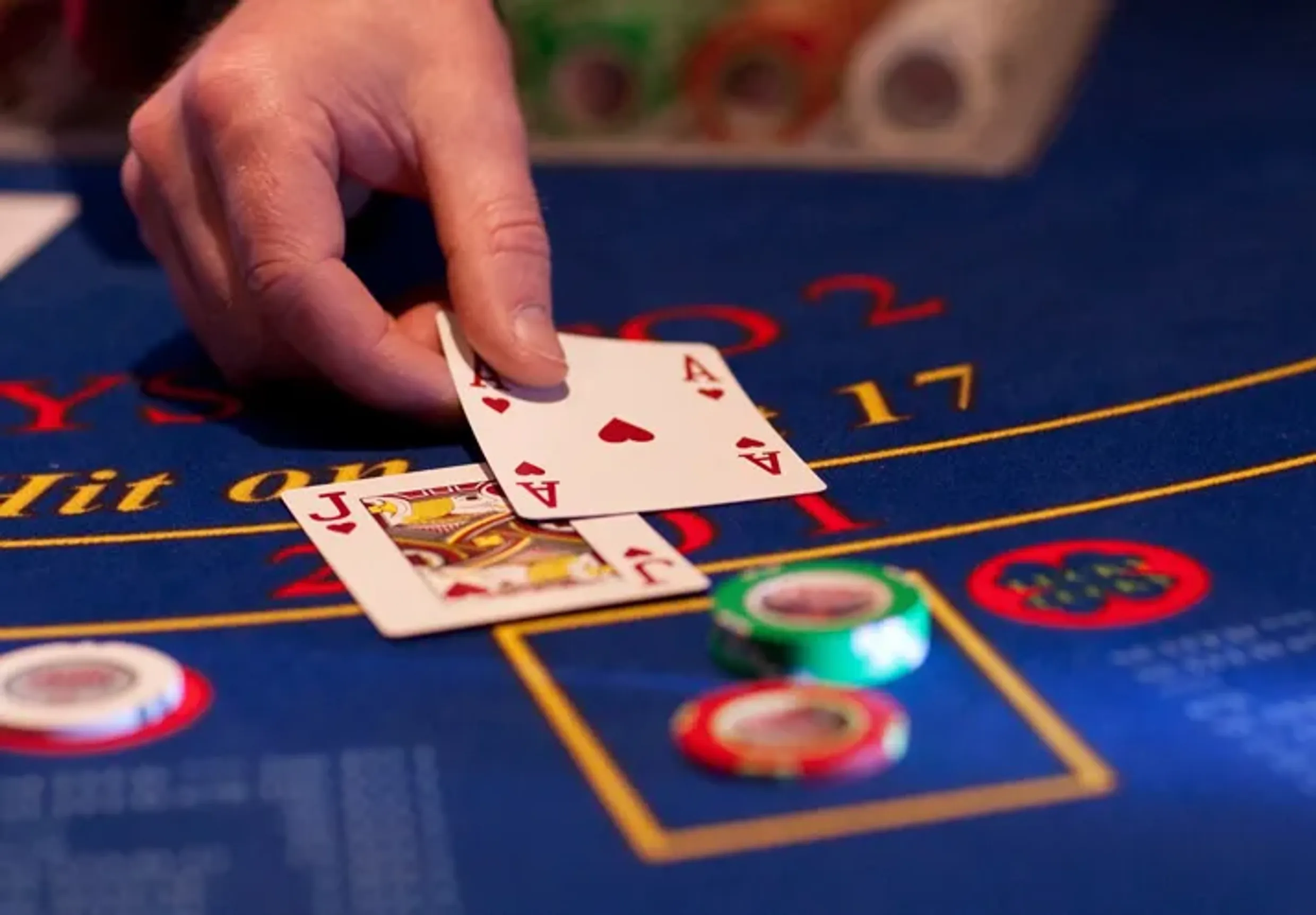
Casino New Brunswick offers blackjack tables with different betting limits throughout the day. Daytime tables start at 5 CAD minimum with Continuous Shuffle Machines for faster play. Evening sessions feature 10-15 CAD minimums with automatic shufflers and hand-shuffled options. Premium tables reach 25 CAD minimums during busy periods.

Table features include:

  • Multiple betting limits from 5-25 CAD
  • CSM tables during daytime hours
  • Hand-shuffled games at higher limits
  • First-come, first-served seating
  • Standard blackjack rules with face cards worth 10 points

Playing Your First Hand

To get involved, walk up to a table and look at the small placard that shows the minimum bet. The minimum and maximum bet amounts are normally posted directly on the table as well. When you are ready, put your cash on the felt just outside the betting circle. The dealer will spread it out, count it, and slide you chips in return.

Then:

  1. Put your chips inside the betting circle before the dealer calls “no more bets”.
  2. Wait to receive your two starting cards and watch the dealer’s up card.
  3. Signal hit or stand using the hand gestures we described above.
  4. After every player acts, the dealer draws and plays their own hand.
  5. If your final total beats the dealer without busting, the dealer pushes your winnings forward. On a push you get your bet back, and on a losing hand the wager stays in the tray.

You can keep playing hand after hand for as long as you like within your limits. When you are finished, take your chips to the cashier cage to cash out.

Shuffle Methods and Card Counting

At tables with CSM units, used cards feed straight back into the machine after each round instead of piling up in a discard tray. Because the deck mix keeps resetting, the usual shoe pattern never really forms and classic card counting systems lose their edge.

On automatic shuffler tables the device handles full shuffles between shoes, but during the shoe the order of cards stays fixed. That means players can still think about composition within that shoe, although the faster dealing leaves less idle time than a hand-shuffled game.

Our hand-shuffled tables at higher stakes stay closer to the old style. Dealers manually shuffle and load the shoe, so there are clear starts and ends to each shoe. Players who study counting techniques tend to prefer these spots, and accept the higher minimum bets that go with them.

Bankroll Tips

For a smoother session, it helps to arrive with a bankroll sized to the limits you pick. A common approach is bringing 20 to 30 times the table minimum. On a 10 CAD table that works out to about 200 to 300 CAD as a starting stack, which usually keeps normal swings from wiping you out right away. Keep in mind that on land-based tables, minimums can be higher than in online formats, and live online tables often have lower limits.

Keeping your bet size fairly steady hand to hand also matters. Flat betting means betting the same amount on each hand, and Martingale means doubling after every loss. Systems that tell you to keep raising bets after each loss look tempting on paper, but in real play they often burn through a bankroll much faster when a cold run appears.

Setting a personal loss cap of around half your original buy-in can act as a hard stop and protect you from losing everything in one visit. Some players also set clear win targets so they have a reason to lock up a profit and walk away when they reach that number.

Other Games on Our Floor

Our casino floor extends past blackjack tables into other classics. At baccarat we offer the usual banker, player, and tie segments, with a commission taken on banker wins as standard for the game. The craps table spreads pass line, don’t pass, and a selection of proposition bets across the layout for players who like dice action.

Roulette wheels feature the double-zero style, with inside and outside bets on numbers 1 to 36 plus 0 and 00. In the poker room, there are tables dedicated to cash games and tournaments. Weekly tournaments normally carry 75 CAD buy-ins on regular nights, and Sit and Go events start at 45 CAD once enough players sit down.

Game TypeKey FeaturesMinimum Bet Range
BlackjackMultiple tables, CSM and hand-shuffle5-25 CAD
Three Card PokerAnte and play structure5 CAD typical
BaccaratBanker/Player/Tie10 CAD typical
RouletteDouble-zero wheel1 CAD inside, 5 CAD outside

House Rules and Dealer Procedures

Under standard blackjack rules, the dealer hits up to 16 and stands on 17 and higher. Certain tables are marked with a rule that the dealer hits soft 17, and that small change adjusts the house edge and the ideal basic strategy chart. Table rules such as dealer hitting soft 17 and whether natural blackjack pays 3:2 or 6:5 should be checked when choosing a table.

Policies on entering a game in the middle of a shoe can differ from table to table. Some games close entry until the current shoe ends and a fresh shuffle takes place, helping maintain a consistent card flow for people already seated.

During play, dealers keep everyone aligned by calling out the main steps: asking for bets, declaring when bets are closed, turning over the hole card, and announcing each result. Wait for these verbal cues before putting out more chips or moving your hands across the layout.

Responsible Play

Before you sit down, decide how much time and money you are comfortable spending. Pick a firm dollar amount you accept as a possible loss and stick to it once play begins. Short breaks of 15 to 20 minutes about once an hour give you a chance to clear your head, check how your session is going, and reset if needed. Remember to play responsibly and take breaks periodically to maintain a clear mind while enjoying table games.

If you ever feel your gambling is getting hard to control, we have support tools in place. Voluntary self-exclusion lets you block yourself from entering the property for chosen periods, and our staff can connect you with problem gambling services that operate in New Brunswick.